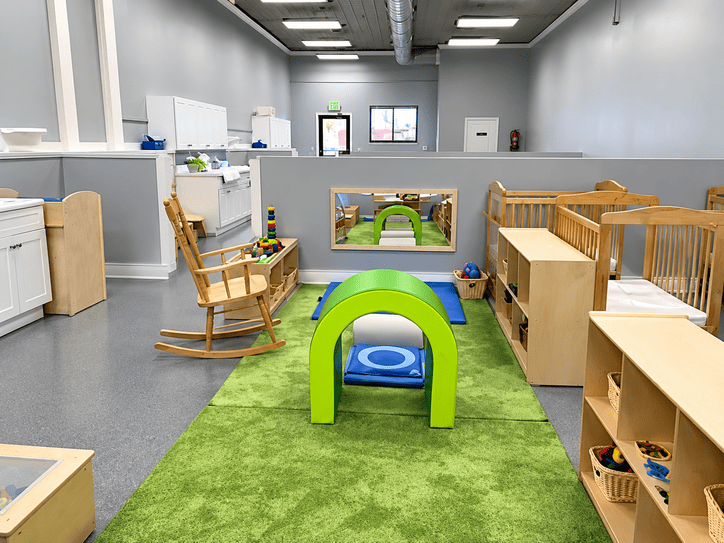
Classroom Lighting Ideas for Early Learning Rooms
Key takeaways:
- Get the daylight first, then layer one even, flicker-free source overhead at a neutral color temperature you can dim.
- Rated magnetic light filters cut glare without hanging anything from the fixture. A scarf draped over a fluorescent tube is a fire risk, not a fix.
- Light the room by zone: brighter over art and table work, softer in the book corner, and dim enough at rest that you can still see every child.
- Lamps and string lights are safe when the cords are secured, the fixtures cannot tip, and nothing sits against a heat source.
Walk into a room lit by one flat, humming panel and the whole space feels tight. Children squint at the art table, the book corner feels like a waiting room, and by mid-afternoon everyone is rubbing their eyes. Swap in softer, better-placed light and the same room settles down.
Classroom lighting ideas usually begin with a lamp catalog, and they go further when the room comes first: where children sit, where they read, where they rest. Lighting is one of the few changes that costs little and shows up the same day, and it shapes how well children see their work, how calm the room feels, and how easily you can scan every child from where you actually stand.
This guide covers what the best lighting for a classroom really is, how to handle glaring fluorescent fixtures, where lamps and string lights are safe, how to light each zone, what to do at rest time, and how to work with the windows you already have. If the layout itself is the problem, our design services start by planning the room before anything is ordered.
What Classroom Lighting Works Best in an Early Learning Room
The short answer: daylight where you can get it, one even overhead source that does not flicker, a color temperature close to white daylight, and a way to dim it. Everything else is a variation on those four.
None of it has to be expensive, and most of it can be decided before you spend a dollar.
Start with Daylight, Then Layer Overhead Light
Daylight is the best light a room can have, and it costs nothing on a clear day. It also carries the full spectrum the eye reads best, so paper and paint stay true under it.
Layer one artificial source over that daylight rather than five competing ones. A single even wash from above beats a bright patch here and a dark corner there, because children move between tables all day.
Aim for a Neutral Color Temperature You Can Dim
Color temperature is measured in kelvin, and the difference is visible. Lamps around 3,000K read warm and slightly yellow. The neutral band, close to white daylight, runs from about 3,500K to 4,500K. Very cool light above 5,000K looks blue and can feel clinical in a small room.
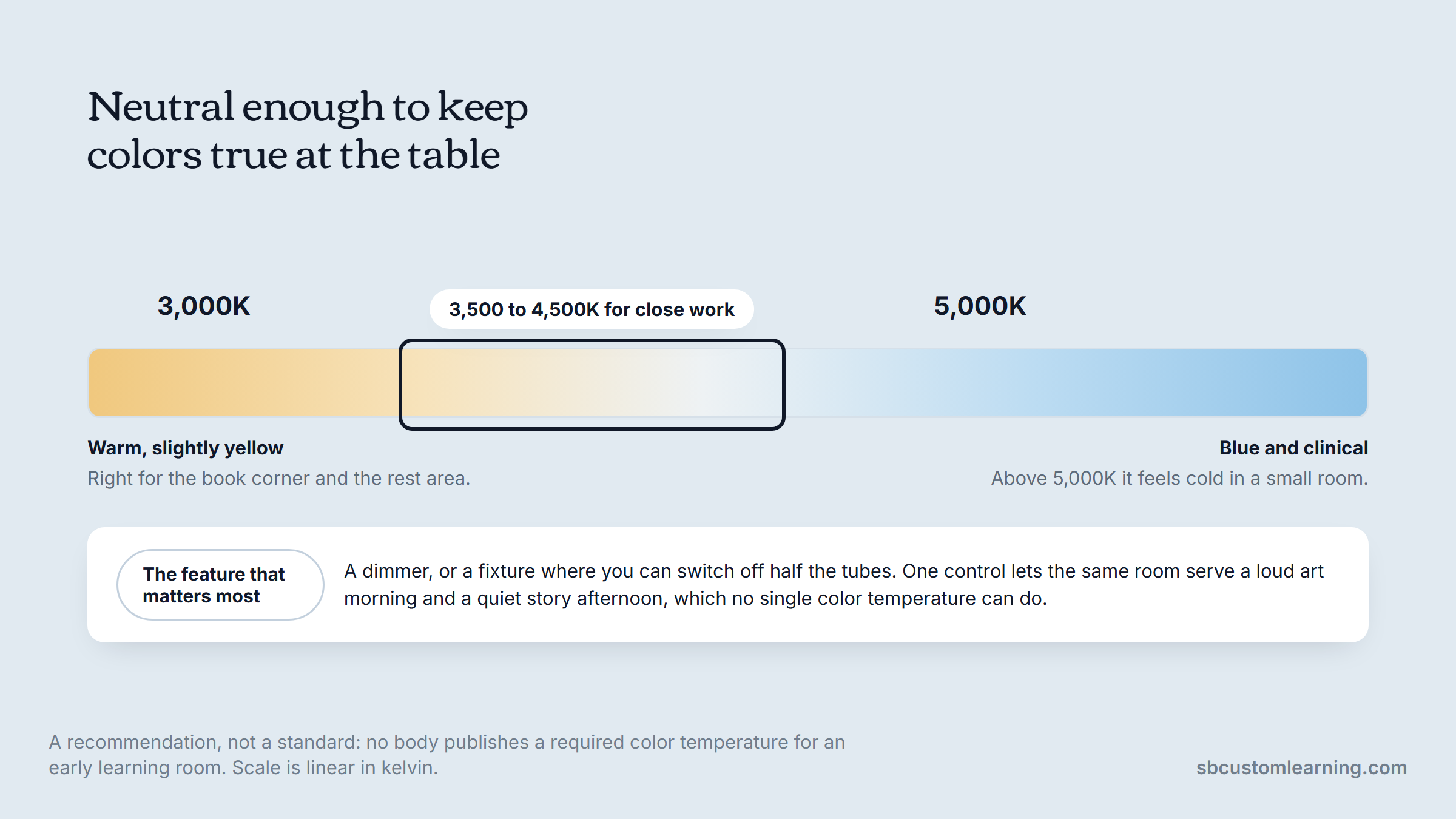
That band is the one to aim at over a table, because it keeps color true without the harshness of the coolest tubes. The feature that matters most is control. A dimmer, or a fixture where you can switch off half the tubes, lets one room serve a loud art morning and a quiet story afternoon.
| Layer | What it does | What to check |
|---|---|---|
| Daylight | Full-spectrum light, free, ties the room to the day | Can you soften direct sun without darkening the room? |
| Overhead wash | Even light for table work and cleanup | Does it flicker? Is it dimmable? |
| Task and accent | Brighter pools over art, softer pools in the book corner | Can an adult reach the switch without crossing the room? |
Read that table as a checklist for one room, not a shopping list. Most early learning rooms already have the first two layers and only need the third, which is the cheapest to add.
Before you add anything, spend twenty minutes reading your own room at three times of day.
- Stand where each child works and note where the light falls short.
- Look up at the ceiling fixtures and listen for a hum or a flicker.
- Watch how the room changes between morning and late afternoon.
- Check whether anyone can dim the light or switch part of it off.
- Note the one change that would help most, and start there.
That short walk usually points at one fix rather than a renovation. When a room needs more than a bulb, light and layout get planned as one decision, the principle behind thoughtful classroom design.
Fluorescent Glare and Flicker: What to Cover, and What Never to Hang
Many early learning rooms still run on the fluorescent tubes that came with the building, and those tubes cause two separate problems. The first is glare, the light that bounces off a whiteboard or a sheet of paper at an angle that makes the eye work harder. The second is flicker.
Flicker is easy to miss and hard on the eyes. Surveying 90 classrooms across eleven UK secondary schools, Winterbottom and Wilkins found that 80 percent were lit by tubes flickering at 100 times a second, a rate that can trigger headaches and interfere with close visual work.
The same survey found that 84 percent of those rooms ran brighter than the level at which visual comfort starts to drop. Those were older children in larger rooms, and the fixtures are the ones still hanging in plenty of early learning buildings.
The fix is not to tear out the ceiling. It is to soften the light without hanging anything where it does not belong, which is where light filters for classrooms earn their place.
Rated Filters Versus Fabric Covers
The most practical option is a rated, magnetic filter, the kind sold as fluorescent light filters for classrooms, that snaps onto the frame of a troffer. It diffuses the harsh light, and because it attaches to the frame rather than the tube, it stays where you put it.
There is evidence behind the format. Across an academic year, a 2023 study switched a classroom back and forth between bare fluorescent tubes and the same tubes covered by thin translucent sheets held on the fixture frame with magnetic discs, which is the frame-mounted filter described above.
What it measured was how the room felt. The students were college-age rather than early years learners, and they rated the filtered light more positively on every scale, reported fewer headaches, and found the whiteboard easier to read.
Fabric covers sold for the same job work only when they carry a flame rating and attach to the frame the way the maker intends.

A blanket, a bedsheet, or a scarf draped straight over a hot tube is a different thing entirely.
| Option | Hangs on the tube? | Flame-rated? | Effect on glare | Verdict |
|---|---|---|---|---|
| Magnetic-rated filter | No, clips to the frame | Yes | Cuts glare, softens light | Best default |
| Rated fabric cover | Frame-mounted | Should be (NFPA 701) | Softens light | Fine when rated |
| Scarf over the tube | Yes, right on the tube | No | Softens light | Never |
| Nothing, leave it | Not applicable | Not applicable | Keeps the glare | Only if you can dim |
So the rule is simple to state and easy to check. A filter that is rated for flame spread and mounted on the frame is a fix. Fabric that hangs off the tube is a risk.
Why the Draped Scarf Is a Fire Risk
Draping fabric directly over a light fixture is the version that lands a room on a correction list. Fire codes treat loosely hanging fabric as a decoration with its own test, and the test exists because fabric near a heat source is an ignition source.
The relevant standard is NFPA 701, which sets the flame-spread test that draperies, curtains and similar hanging materials have to pass, and NFPA 1 requires those materials to meet it. Hanging anything from a ceiling tile, a sprinkler head, or a fixture is the other common failure at inspection.
The safer move is to leave the tube alone and change the light another way. Turn off half the tubes, add fluorescent light filters for classrooms that mount to the frame, or bring in a floor or table lamp for the corner that needs it.
Sensory-sensitive children are often the first to feel flicker and glare, and it shows up as squinting, fidgeting or avoiding a work area. That is the case for planning light around each child rather than one setting for the whole room, the same thinking behind universal design for early learning.
Lamps and String Lights: Cords, Tip-Over, and Heat
A floor lamp, a few table lamps and a short run of string lights can warm a harsh room in an afternoon, and teachers have leaned on them for years. They also bring three risks you can manage in advance: a cord across a walkway, a lamp a child can pull over, and a bulb close to fabric.
Handle those three and the room stays both safe and soft.
- Secure every cord to the wall or run it behind furniture, never across a walkway.
- Choose lamps with a weighted base, or fix the base to a low shelf.
- Keep curtains, paper and fabric at least a foot from any bulb.
- Use only the bulb wattage the fixture is rated for.
- Switch to cool-running LED bulbs where a fitting gets hot.
- Plug the lamps into one switched strip rather than daisy-chaining extension cords, and confirm your fire code allows a strip in a classroom, since many treat one as temporary wiring only.
- Ask about building and fire rules before you buy any plug-in fixture.
Seven small habits, and none of them costs much. A lamp is a fixture rather than a decoration, so it earns the same care as anything else with a cord and a heat source.
The building side is where these plans usually stall. A center can be told that lamps are fine only if they come out before a fire marshal's visit, or that the decision belongs to a building safety committee rather than to the room, so ask before you spend anything.
String lights deserve their own note, because the string lights classroom look is the one teachers ask about most. Keep the run short, mount it along a wall or a low board, and leave it off any flashing mode.
Never run it where a child can pull it down, and never across an exit. Where a building does not allow them at all, a single permitted lamp gives much of the same warmth. Soft light and warm finishes shape how a room feels more than any poster does, a pattern visible across our completed projects.
Lighting by Zone: Brighter for Work, Softer for Rest
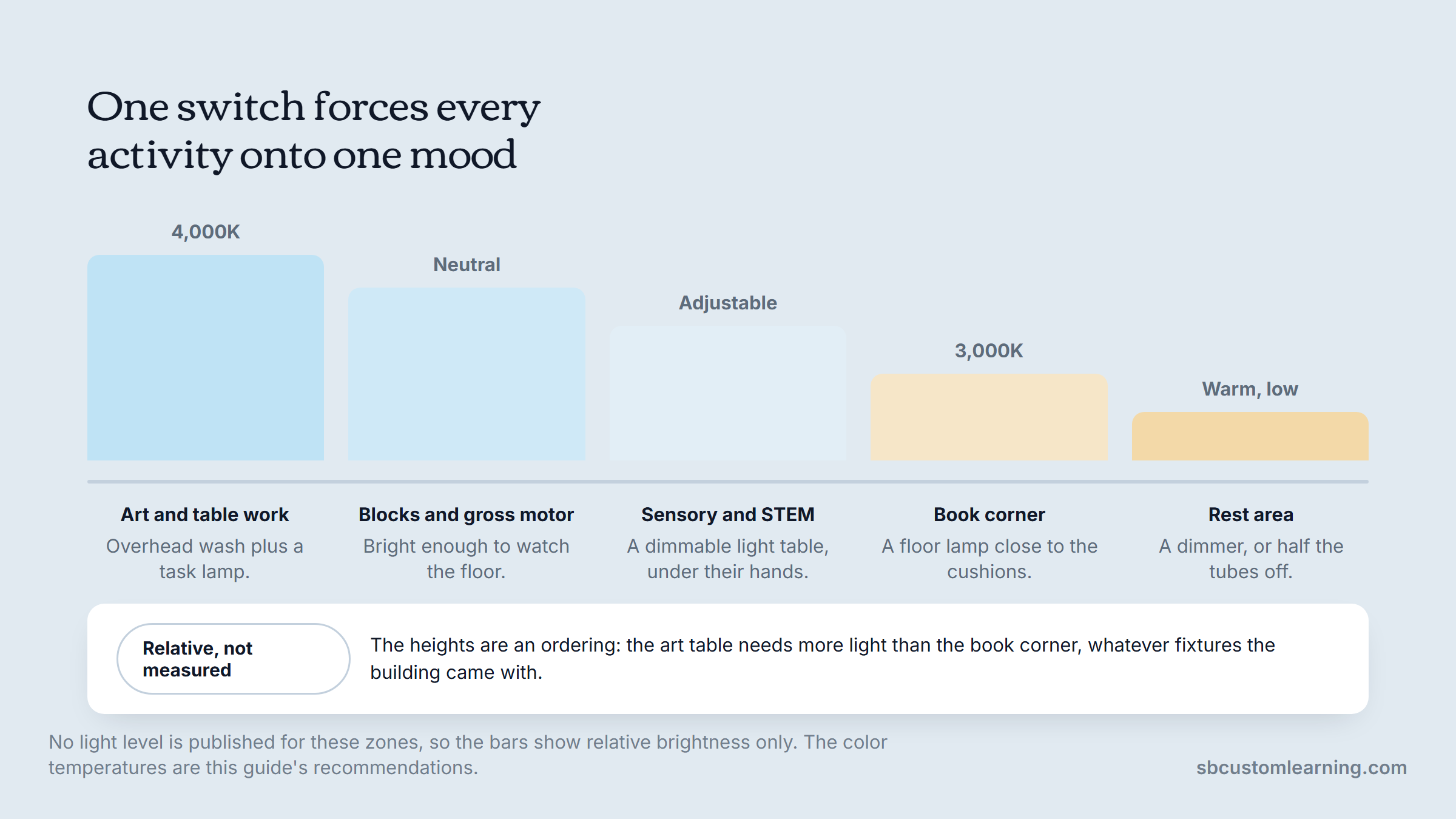
One switch for the whole room forces every activity onto one mood. Zoning is the part of classroom lighting that pays back fastest, because it lets the room run brighter where children need to see detail and softer where they need to settle, without moving a wall.
| Zone | Mood | Color temperature | What to add |
|---|---|---|---|
| Art and table work | Bright and even | Neutral, about 4,000K | Overhead wash plus a task lamp |
| Book corner | Soft and warm | Warm, about 3,000K | A floor lamp or a small pendant |
| Sensory and STEM nook | Adjustable | Neutral to cool | A dimmable classroom light table |
| Block and gross-motor area | Bright enough to watch the floor | Neutral | Even overhead, few hard shadows |
| Rest area | Dim, corners visible | Warm and low | A dimmer or half the tubes off |
A classroom light table earns its place in the sensory or STEM nook because it puts the light where a child's hands are. Light from underneath makes translucent shapes, color mixing and simple science visible at close range, and it keeps attention on the table instead of the ceiling. The rest of the room can stay calm while that one corner stays bright.
Art and Table Areas
Close work needs the most light in the room. Aim the brightest, most even light at the tables where children cut, draw and build, and keep hard shadows off the paper. A single task lamp over the art table often does more than raising the whole ceiling.
The Book Corner and the Sensory Nook
The book corner wants the opposite: a warm, low pool of light that signals quiet. A floor lamp or a small pendant close to the cushions does that better than a bright room, and it gives children a visual cue that this is the calm end of the space.
Rest Area and Sightlines
Even the softest zone has to stay watchable. Keep the rest area dim but leave the paths and corners visible, so one adult can still count heads without switching the room back on.
Grown-ups stay on the floor and still need to be seen, which is why walls and dividers that stop at a height you can see over matter as much as the lamps. A movable partition that divides a loud zone from a quiet one keeps sightlines open, the case we make for dividing a room without construction.
Rest-Time Lighting: Dim Without Losing Sightlines
Rest is the hardest time to light well, because the room has to quiet down without going dark. A room that drops to black makes one adult walk the floor all nap, and a child who cannot sleep has nowhere gentle to look.
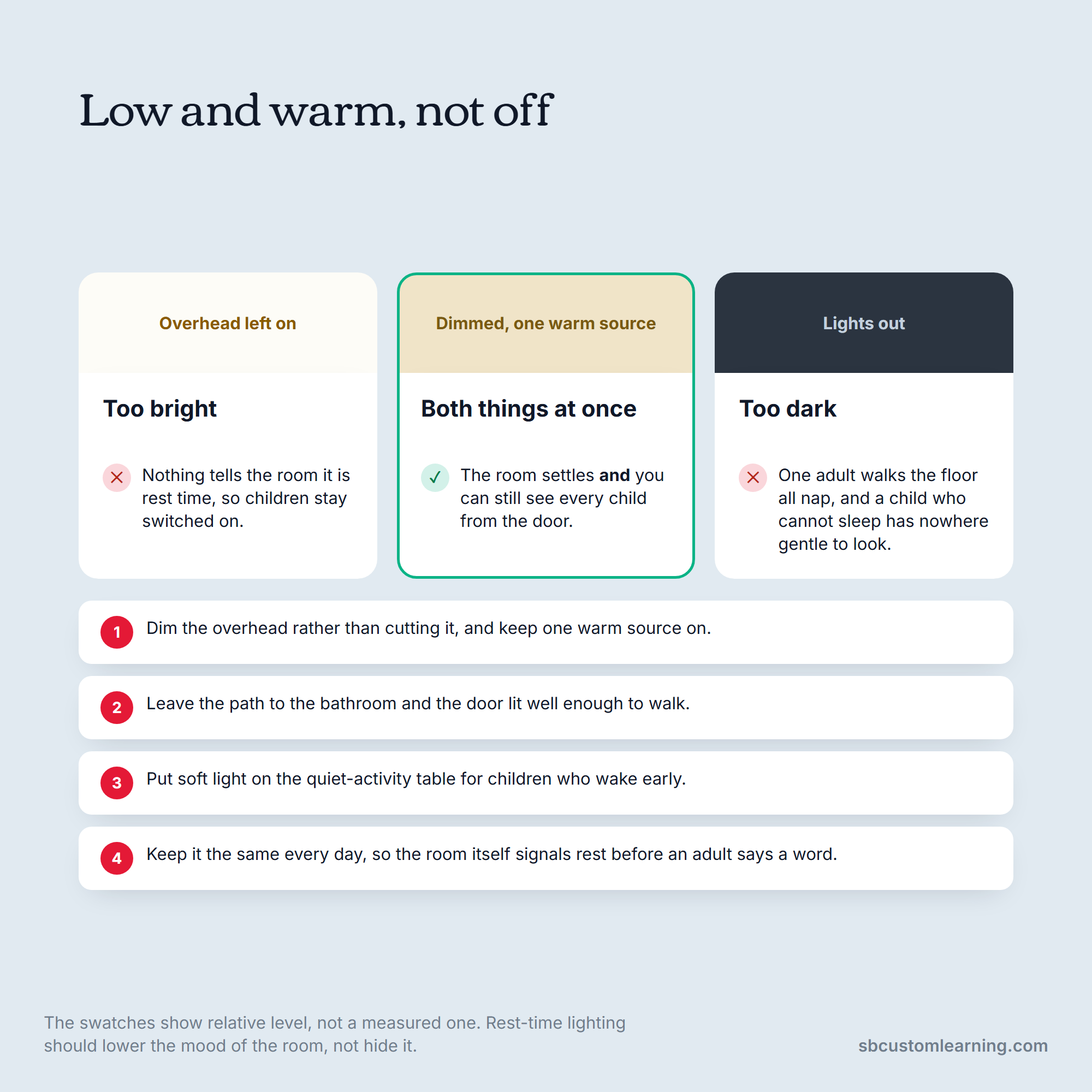
The goal is low and warm, not off. Use a dimmer, switch off the tubes over the cots, or bring in one warm lamp, and leave enough light on the paths and exits that you can see every child from the door. Rest-time classroom lighting should lower the mood of the room, not hide it.
A few moves make rest time work without a fight.
- Dim the overhead rather than cutting it, and keep one warm source on.
- Cover the windows enough to soften glare, not so much that the room feels closed.
- Leave the path to the bathroom and the door lit well enough to walk.
- Put soft light on the quiet-activity table for children who wake early.
- Keep the same lighting every day, so the room itself signals rest.
The last point does the most work. When the light changes the same way every afternoon, children read the shift before an adult says a word, and the room settles faster. Set the room from the fixed points outward, in the same sequence as setting up a room.
Working with the Windows You Have
You cannot move the windows, but you can decide what they do. A room with full sun all afternoon needs different handling than a room that faces north, and a room with no windows at all is a third case.
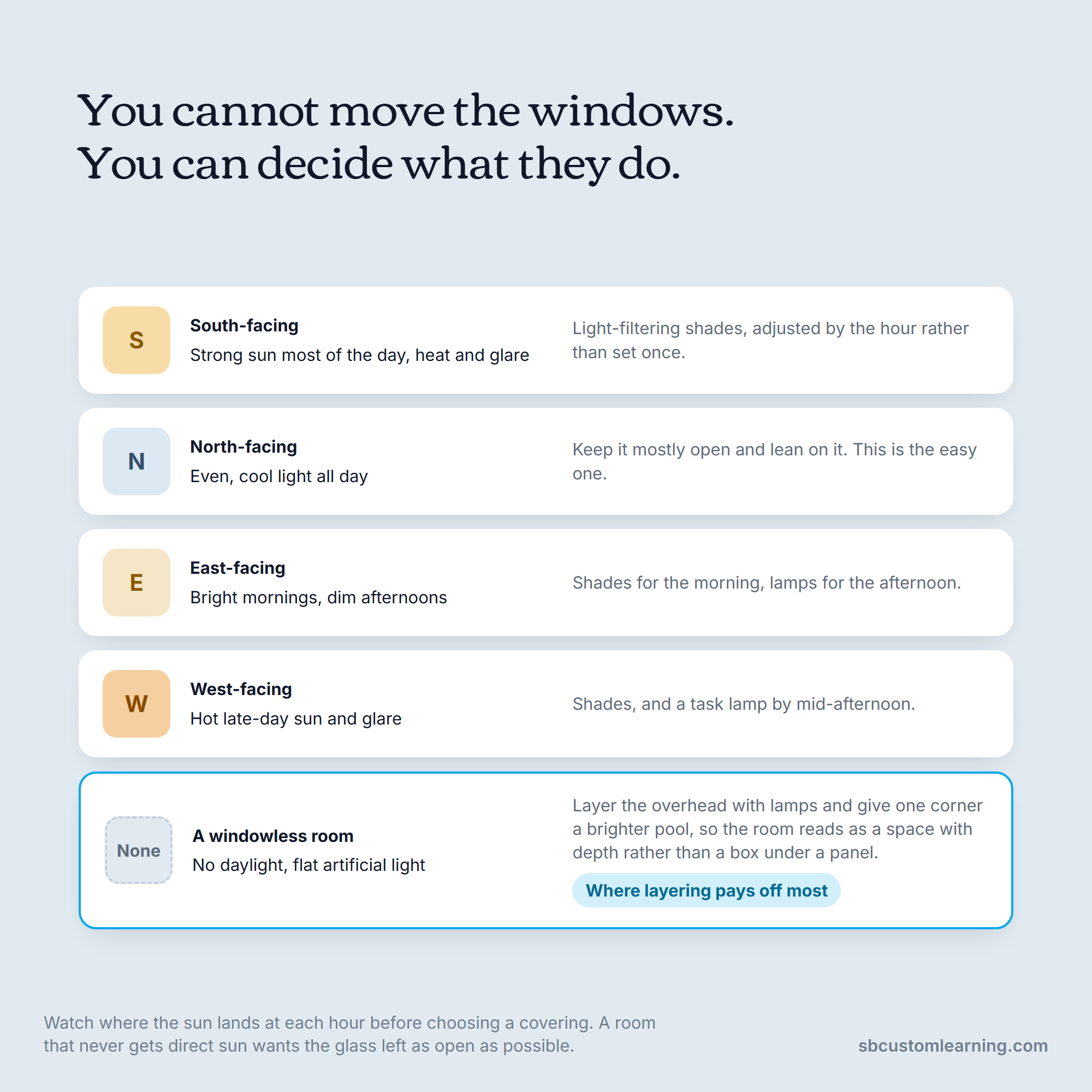
Start by watching where the sun lands at each hour, then match the covering to the problem. A room with direct afternoon sun wants a light-filtering shade that keeps the view and softens the glare. A room that never gets direct sun wants the glass left as open as possible.
| Window | What happens | What to do |
|---|---|---|
| South-facing | Strong sun most of the day, heat and glare | Light-filtering shades, adjust by the hour |
| North-facing | Even, cool light all day | Keep it mostly open and lean on it |
| East-facing | Bright mornings, dim afternoons | Shades for the morning, lamps for the afternoon |
| West-facing | Hot late-day sun and glare | Shades and a task lamp by mid-afternoon |
| Windowless room | No daylight, flat artificial light | Layer overhead with lamps and a light table |
A windowless room is where layering pays off most, because the flat ceiling light is all there is. Add a warm lamp or two and give one corner a brighter pool, so the room reads as a space with depth rather than a box under a panel.
When the layout fights the light, the fix is often a plan rather than a purchase. Light and traffic flow belong in the same plan, which is the starting point in classroom design ideas.
The Room You Can Change This Week
You do not have to rewire the building to fix a harsh room. Start with the daylight, add one even overhead source you can dim, and keep anything you hang on the fixture frame rather than on the tube. Then light the room by zone, soften it at rest, and work with the windows instead of against them.
Three changes handle most rooms: replace a bare glare with a rated filter, put one warm lamp in the book corner, and give the art table a brighter pool of light. None of them is expensive, and all of them are visible by the afternoon.
That is the part we care about at SB Custom Learning. We plan early learning rooms before anything is ordered, so the light, the furniture and the traffic flow are decided together rather than one at a time.
We work across the Midwest and keep adding states. Finishes and fabrics travel by mail, so a sample can sit in your own room under your own ceiling before a whole center is ordered.
We draw the plan, choose the pieces from a range of established makers, commission the one-off items a catalog cannot supply, and send a crew to fit them. Every project is priced on its own, because no two rooms carry the same light.
SB Custom Learning has worked in early education for over 20 years, long enough to have designed and installed the custom play lofts at Educare Chicago. Start with the smallest problem if that is where you are: one rated filter, one warm lamp, one dimmer. When the layout needs the bigger fix, schedule a consultation and we will plan the room around the children who use it.
FAQs
Is classroom lighting important for learning?
Yes. Light affects how well children see close work, how alert they feel, and how calm the room seems. Harsh, flickering light makes the eyes work harder and can trigger headaches, while even, controllable light lets children stay with a task longer.
What color temperature is best for a classroom?
A neutral band around 3,500K to 4,500K suits close table work, because it keeps colors true without the harshness of the coolest tubes. Use warmer light near 3,000K for the book corner and the rest area, where the room should feel soft rather than bright.
Can I use string lights in a classroom?
Often, yes, if your building and fire rules allow plug-in fixtures. Keep the run short, mount it along a wall or a low board, never across an exit, keep it off flashing modes, and secure the cord. Where they are not allowed, a single permitted lamp gives much of the same warmth.
What is a classroom light table used for?
A classroom light table puts a bright, even glow under a child's hands. It is used in sensory and STEM areas to explore translucent shapes, color mixing and simple science at close range, and it lets that one corner stay bright while the rest of the room stays calm.
How do I cut glare from fluorescent lights?
Cover the fixture with a rated, frame-mounted filter rather than draping fabric over the tube. Turn off half the tubes where you can, lower the overall level, and add a task lamp for close work. Keep any hanging material flame-rated, and check your building rules first.