
10 Essential Classroom Supplies for 2026 (Teacher-Approved List!)
Setting up a classroom for spring is about more than aesthetics. The right supplies directly affect how students learn, how teachers teach, and how smoothly a day runs. But with hundreds of options on the market, it's easy to overspend on things you don't need and underinvest in what actually matters.
We worked with educators and reviewed industry purchasing data to identify the 10 supplies that consistently make the biggest difference in early childhood and K–8 classrooms. Whether you're refreshing one corner or outfitting an entire new room, this list gives you a clear starting point.
1. The All-In-One Art Easel
An art easel is one of the most versatile tools in any early childhood classroom because it serves fine motor development, creative expression, and focused independent work – all in one piece of equipment. According to the National Education Association, arts integration improves engagement and retention across all subject areas.
What to look for:
- Double-sided design (chalkboard + whiteboard or paper roll)
- Adjustable height for different age groups
- Stable base with a wide footprint
- Easy-clean trays for paint and markers
Find art easels at SB Enterprises: Shop Art Easels
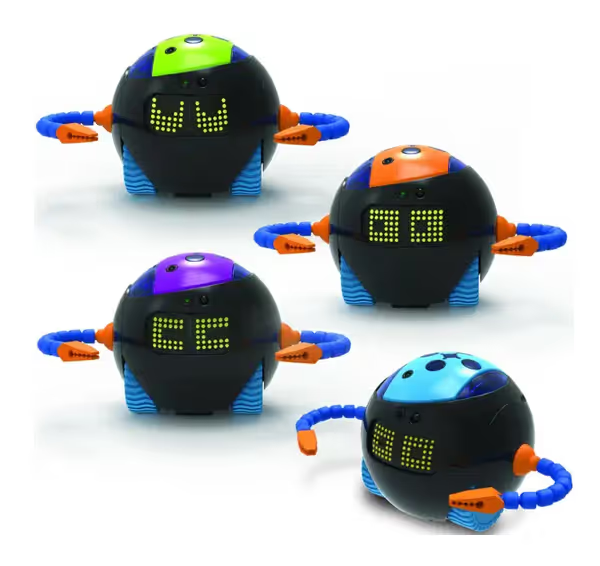
2. Stem Building Sets
STEM building sets are among the most educationally dense purchases a classroom can make. Magnetic tiles, interlocking blocks, and modular construction sets teach spatial reasoning, logical thinking, and collaborative problem-solving without a lesson plan. A 2023 report from the Joan Ganz Cooney Center found that open-ended building play improved problem-solving scores in kindergarteners by 27% over a single semester.
What to look for:
- Non-toxic, BPA-free materials (especially for Pre-K)
- Large enough pieces to prevent choking hazards for younger students
- Sets with 100+ pieces to allow true open-ended building
- Storage-compatible design (bins, bags, or cases included)
Browse STEM supplies: Shop STEM & Building
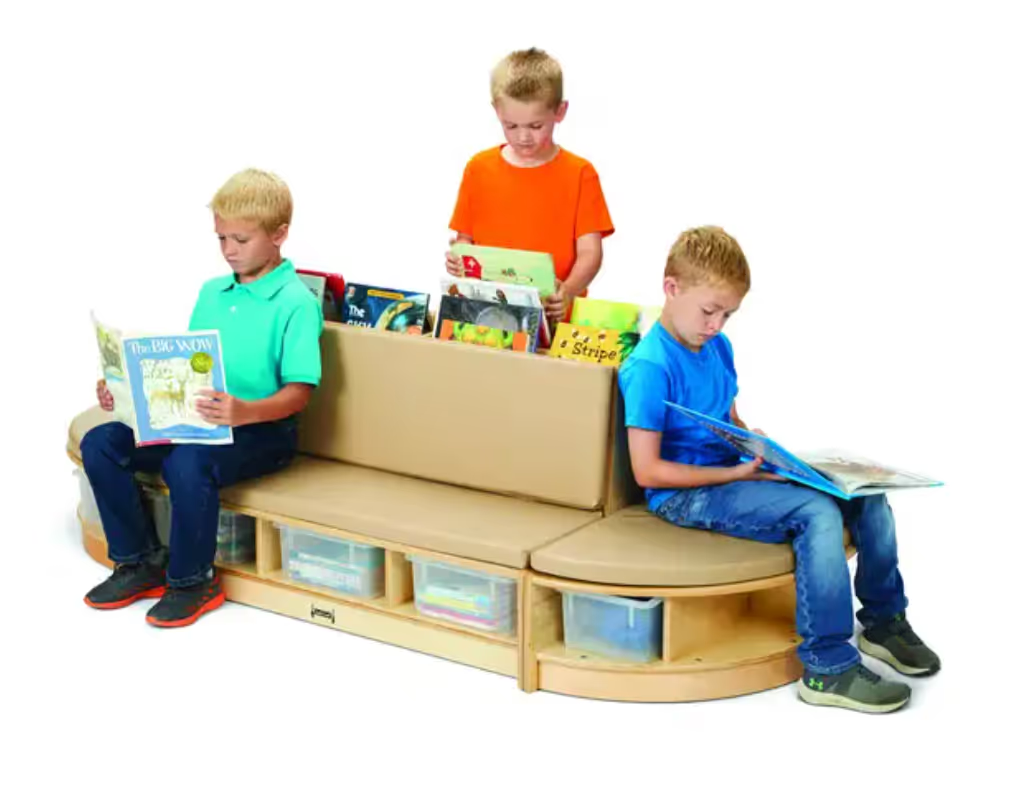
3. Reading Corner Furniture
A dedicated reading nook transforms reading from an assignment into a choice. Research from the American Library Association consistently shows that students who have access to comfortable, inviting reading spaces read more frequently and for longer periods. The physical environment signals to students: this is a place to settle in and explore.
What to look for:
- Washable, durable fabric (classrooms are not gentle environments)
- Low-profile seating that lets teachers maintain sightlines
- A small adjacent shelf or book display for easy browsing
- Defined space – a rug or canopy helps signal the zone
Find reading corner furniture: Shop Reading Corner
4. A Classroom Rug for Gathering & Play
A classroom rug is one of the highest-impact, lowest-cost ways to define space and build routine. Morning meetings, read-alouds, group games, and circle time all anchor to a shared rug. It signals to students that this is community space – and it adds warmth, color, and acoustic dampening that hard floors simply can't provide.
What to look for:
- Low pile for easy cleaning and safety (no trip hazards)
- Large enough for your full class to sit comfortably (typically 8x10 ft or larger)
- Non-slip backing
- Educational design optional – alphabet, world map, and number rugs add passive learning
Browse classroom rugs: Shop Rugs & Mats
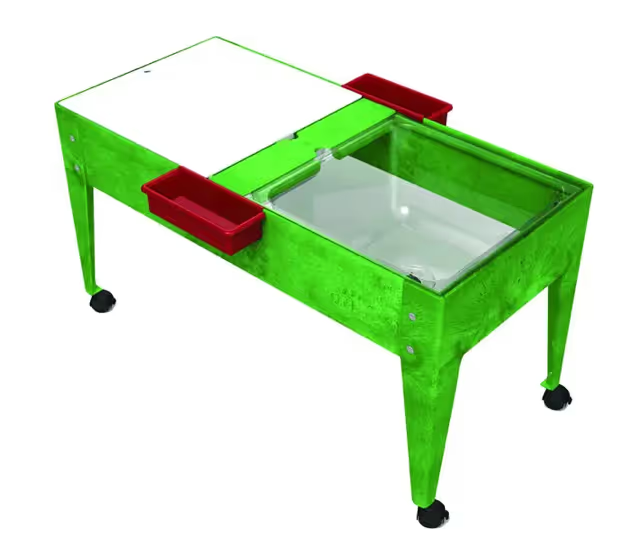
5. Sensory Play Tables
Sensory play tables are a must-have for any preschool or early childhood classroom because they support cognitive development, emotional regulation, and fine motor skills simultaneously. The ability to quickly swap fillings – sand, water, kinetic sand, dried rice, foam – keeps the activity fresh and developmentally targeted across the school year.
What to look for:
- Adjustable or removable legs (accommodates standing and seated play)
- Deep basin with a tight-fitting lid for storage between uses
- Drainage plug for water activities
- Smooth interior with no crevices that trap material
Explore sensory tables: Shop Sensory Play
6. Dramatic Play Sets
Dramatic play is where language explodes. Play kitchens, puppet theaters, dress-up stations, and pretend market setups give children a context for practicing vocabulary, social negotiation, and narrative thinking. According to Vygotsky's Zone of Proximal Development framework – still foundational in early childhood education – dramatic play is where children perform above their current developmental level, making it one of the most cognitively rich activities in the classroom.
What to look for:
- Durable construction – these get used hard
- Gender-neutral options that invite all students
- Modular sets that can be reconfigured (kitchen + market, for example)
- Age-appropriate accessories without small parts for Pre-K
Find everything for your dramatic play area: Shop Dramatic Play
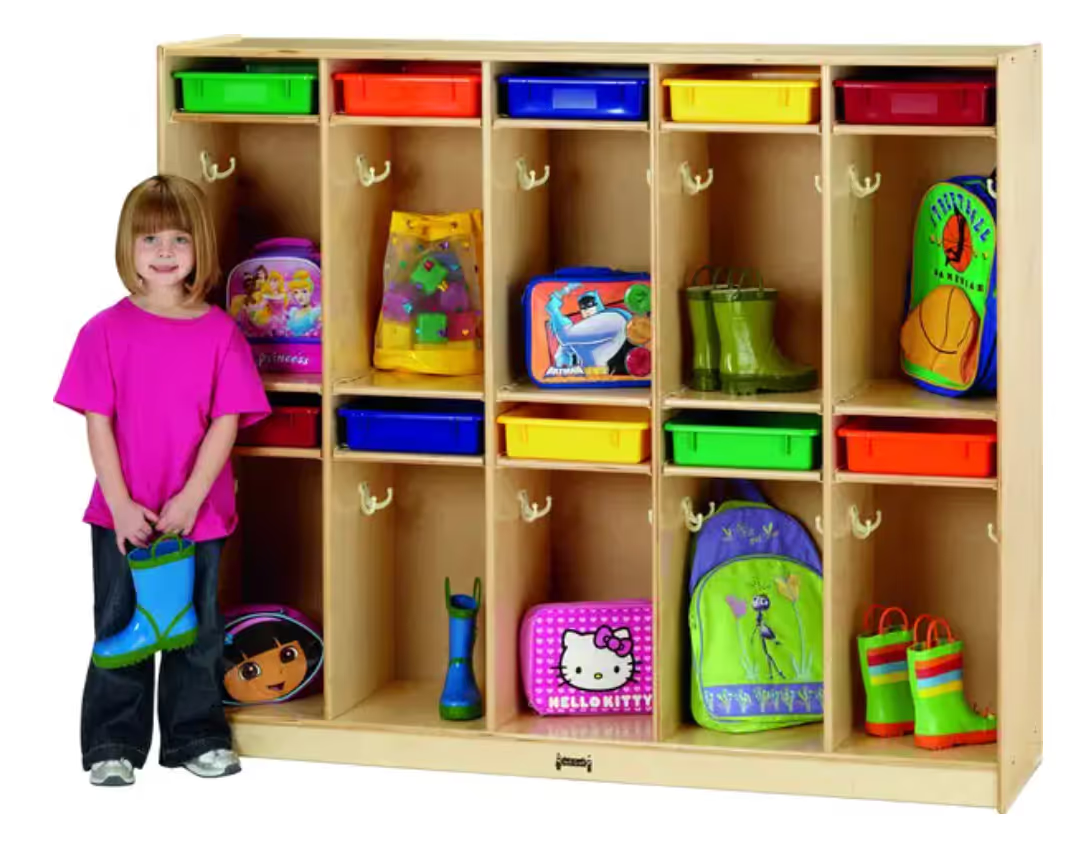
7. Practical Storage Solutions (Like Lockers!)
Storage is often the last thing teachers budget for and the first thing they regret skimping on. Individual cubbies or child-sized lockers do more than organize belongings – they give each student a sense of ownership and responsibility for their own space. Teachers who have transitioned to dedicated individual storage consistently report fewer lost items, calmer transitions, and more independence at arrival and dismissal.
What to look for:
- Labeled or labelable compartments
- Hooks for backpacks and jackets
- Solid back panels (open-back cubbies lose items constantly)
- Stackable or wall-mountable options if floor space is limited
Check out storage cubbies and lockers: Shop Storage
8. Teacher Essentials: Markers Blu Tack & Laminators
Teachers are the most under-supplied people in any school. High-quality whiteboard markers, repositionable adhesives like Blu Tack, and laminating supplies are the operational backbone of a well-run classroom. These aren't glamorous, but experienced teachers buy them first – and buying quality versions upfront saves money over the course of a year.
Key items to stock:
- Dry-erase markers (fine and chisel tip) – buy in bulk
- Blu Tack or equivalent for damage-free wall display
- A laminator + pouches for reusable materials
- Strong adhesive tape and repositionable options
Stock up on teacher supplies: Shop Office Supplies
9. Durable, Child-Sized Furniture
Child-sized furniture is non-negotiable for any developmentally appropriate classroom. Tables and chairs sized to your students promote proper posture, reduce fatigue, encourage independence, and are simply safer. Furniture that fits also signals to children that the space was designed for them – a subtle but powerful message.
SB Enterprises specializes in custom, durable, developmentally appropriate furnishings built for the demands of real classroom use – not just aesthetics.
What to look for:
- ANSI/BIFMA-certified construction for safety and durability
- Height-appropriate to your age group (chart available from furniture suppliers)
- Easy-clean surfaces — laminate or solid hardwood outperforms fabric
- Stackable chairs to maximize floor space during play or movement time
Find tables, chairs, and more: Shop Classroom Furniture
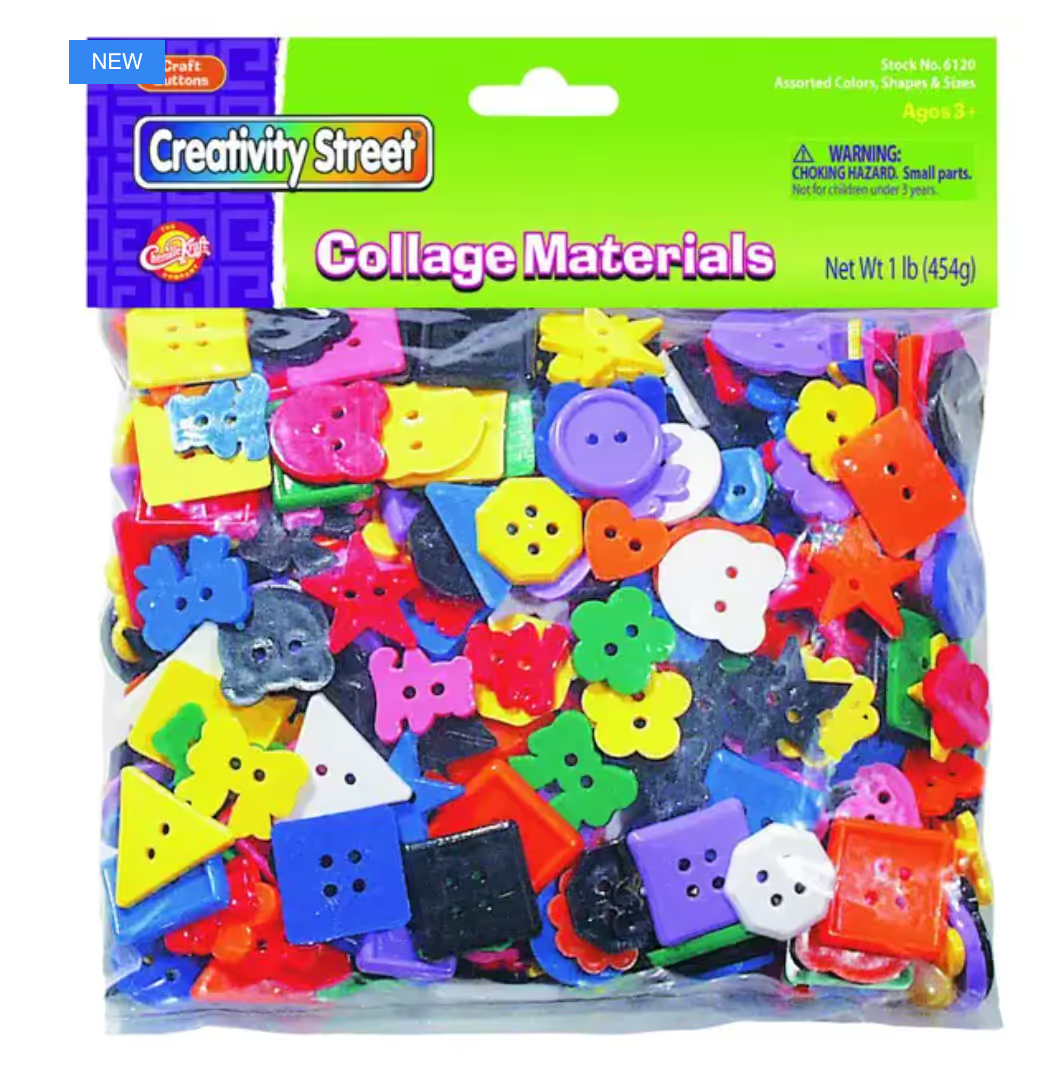
10. The Basics: Glue Sticks, Pencils & Paper
In an era of apps and smartboards, foundational supplies remain the backbone of hands-on learning. Retailers report consistent, high-volume demand for glue sticks, pencils, and paper year after year — and for good reason. These items support writing development, arts and crafts integration, science projects, and daily classroom routines that no digital tool fully replaces.
Buying tips:
- Buy glue sticks in bulk – they dry out and get lost constantly
- Pre-sharpened pencils save significant setup time
- Stock a variety of paper weights: standard, cardstock, and construction paper
- Crayons over markers for younger students (easier grip, less mess)
Get all your classroom basics: Shop Arts & Crafts Supplies
Set Up Your Dream Classroom with SB Enterprises
Whether you’re refreshing a single reading corner or outfitting an entire new school, SB Enterprises can help.
Ready to build your best classroom yet? Browse the links above or book a consultation with SB Enterprises today to bring your vision to life!
Frequently Asked Questions
What supplies does every classroom need?
Every classroom needs a combination of furniture (child-sized tables, chairs, and a rug), learning tools (STEM sets, art easel, dramatic play area), organizational solutions (cubbies or lockers), and consumable supplies (glue sticks, pencils, paper, and markers). The exact mix depends on age group, but these 10 categories cover the essentials for most Pre-K through grade 5 classrooms.
What are the best STEM toys for preschoolers in 2026?
For preschool-age children, the best STEM toys are open-ended and hands-on: magnetic tiles, large interlocking blocks (like Duplo-style bricks), and simple gear sets. Look for pieces large enough to avoid choking hazards, non-toxic materials, and sets with 50–100+ pieces to allow real building. Avoid sets with too many rules or single-solution outcomes – at this age, the process matters more than the product.
How do I set up a reading nook in a classroom?
Start with a defined space – a small rug or mat delineates the area. Add low, comfortable seating (bean bags, floor cushions, or a small soft chair) and a simple book display at child eye-level. Good lighting is important; a corner with natural light is ideal. Keep the zone calm and separate from high-traffic areas. The goal is to make the reading corner feel like a retreat, not just another work station.
Is sensory play appropriate for older students?
Yes. While sensory tables are most common in Pre-K and kindergarten, sensory play remains beneficial through early elementary. For older students, the materials and framing shift — kinetic sand, slime, and textured science materials can be incorporated into structured activities rather than free play. Sensory engagement supports focus and emotional regulation at all ages, which is why occupational therapists frequently recommend it for students of all ability levels.